For many, Antarctica sits at the top of the bucket list. If you love nature, it’s one of those once-in-a-lifetime journeys. There’s something magnetic about the continent — remote, wild, and utterly unlike anywhere else. Even getting there is part of the magic: the long journey, the anticipation, and the sense of adventure building long before you ever set foot on the ice.
- Join us on this Antarctica Photography Expedition 2027 with Raymond Hoffmann
I’ve been to Antarctica many times, and I knew early — this one would be different.
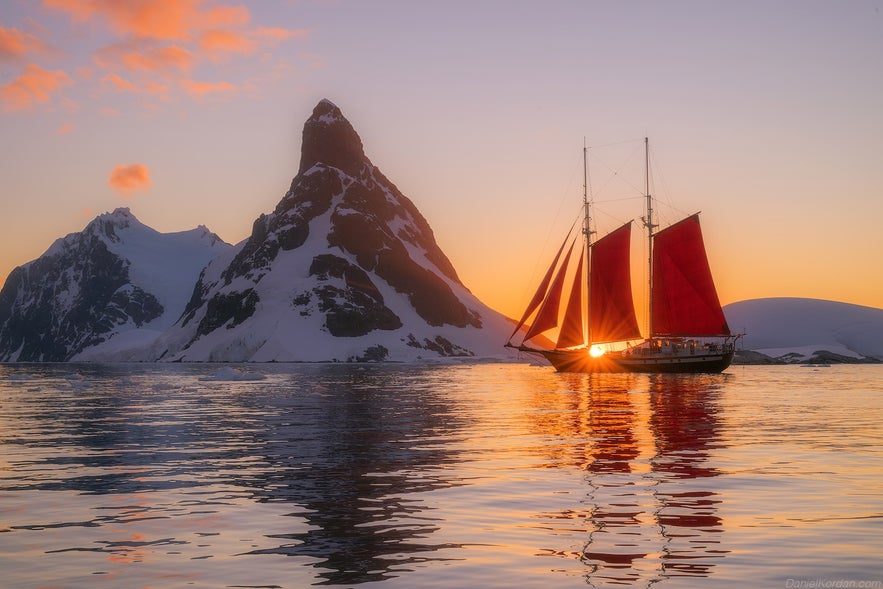
This was a dream expedition: a small group of photographers with the same mindset, the same patience for light, and the same hunger for real moments. And instead of being passengers in the background, we were sailing through Antarctica on two small yachts — Tolkien and Elsi — with red sails that turned every crossing into a photo opportunity. In a landscape that already feels unreal, those sails became a signature: bold, elegant, and photogenic from almost any angle.
Day 0-1: From Punta Arenas to King George Island
We met in Punta Arenas in the familiar expedition way: briefings, biosecurity, landing protocols, gear checks, and a welcome dinner. It looked like a standard start. The next morning we flew south and landed on King George Island. Penguins were our welcome committee, and the first surprise was logistical and perfect: we transferred by bus. We stopped near the church by Bellingshausen Station, then boarded Tolkien and Elsi and shifted fully into expedition rhythm — layers, zodiacs, cameras protected, batteries warm.
Day 2: Livingston Island
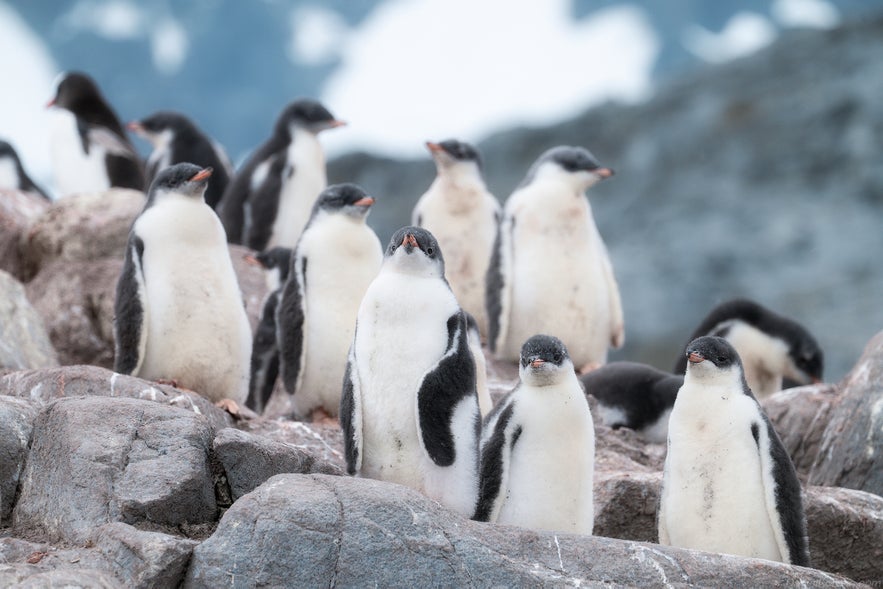
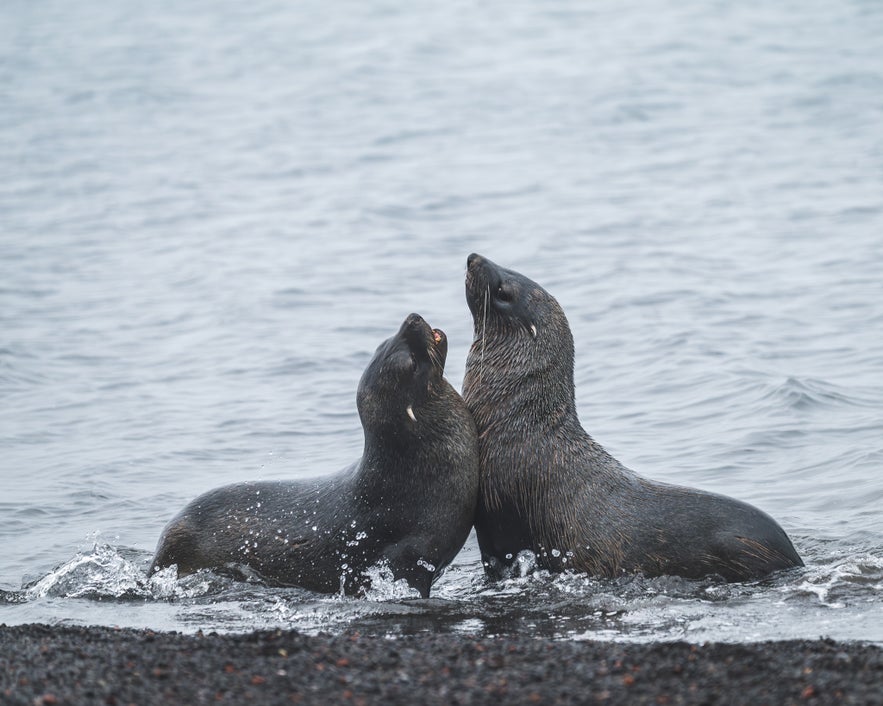
Our first proper landing was Livingston Island. When we landed near the elephant seal area, it was exactly the kind of scene people imagine when they dream about Antarctica: big beaches, wildlife everywhere, and the feeling that you’ve stepped into a nature documentary. Southern elephant seals were sprawled on the shore, penguins were everywhere. Birds were constantly moving overhead.
We also met Fyodor Konyukhov, living alone in a small research camp for months while running microplastic research — collecting water and penguin samples to document how far pollution has reached, even here.
Day 3: Trinity Island, Mikkelsen Harbour, Enterprise Island
We reached the Trinity Island area in the early hours and repositioned to Mikkelsen Harbour. This was the working day: hours spent installing the red sail decorations — real rigging, real checks, very little sleep.
Somewhere in the middle of all that, we did a short cruise and spotted a leopard seal on the ice.
By evening we moved toward Enterprise Island, shaping plans around conditions—exactly where small yachts feel like the perfect tool for Antarctica.
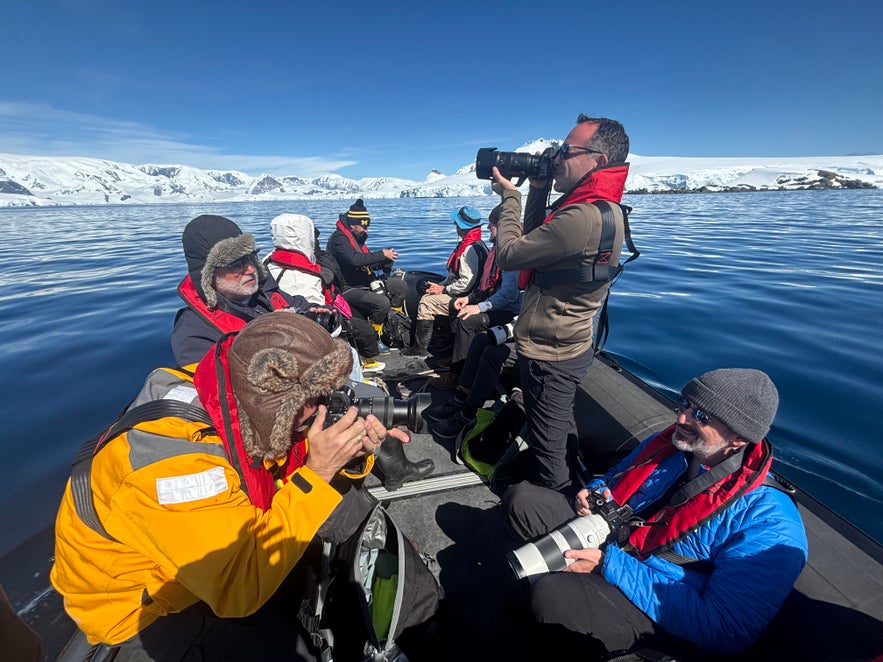
Day 4: Foyn Harbour, Wilhelmina Bay, Errera Channel, Neko Harbour
At sunrise we cruised near Foyn Harbour, where whaling history still sits in the water. We saw remnants of early whaling operations: old chain, metal fittings, timber, partially submerged wreck material.
After breakfast we continued into Wilhelmina Bay and along Errera Channel, scanning constantly for wildlife and light. Instead of forcing the original schedule, we chose the better light and headed to Neko Harbour for sunset. It was the right call: gentoo penguins near shore, glacier walls behind, calm water, and soft polar light. This was when the red sails truly paid off—suddenly the boats weren’t just transport; they were part of the image.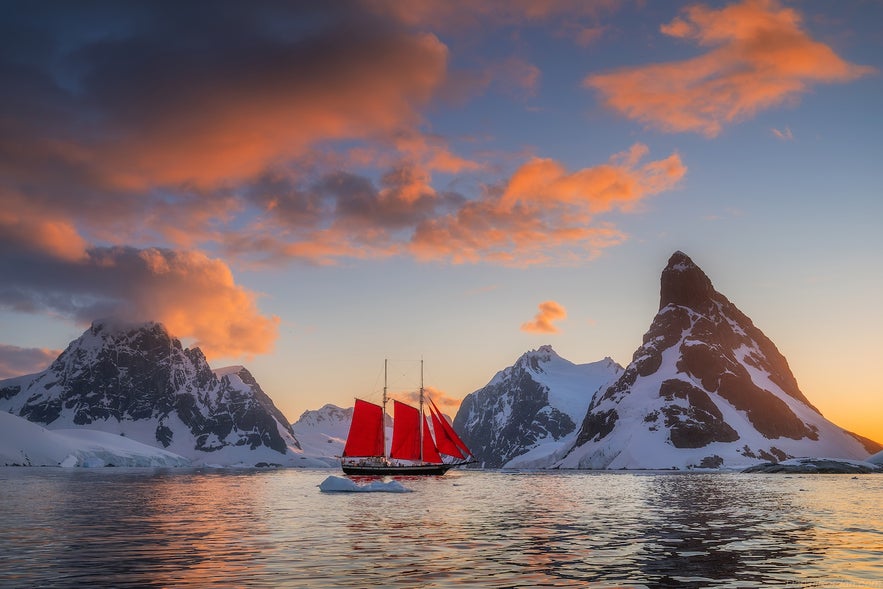
Day 5-10: Paradise Bay, Port Lockroy, Lemaire Channel, Cuverville Island, Half Moon Island
We anchored in Paradise Bay near Almirante Brown Station and headed out for an afternoon Zodiac cruise. Antarctica delivered in full: humpback whales surfacing nearby, leopard seals resting on the ice, and penguins lining the shore.
Next day, we anchored at Port Lockroy on Goudier Island, surrounded by gentoo colonies and a palpable sense of history. After breakfast, we landed again to wander among penguins and weathered whale remains.
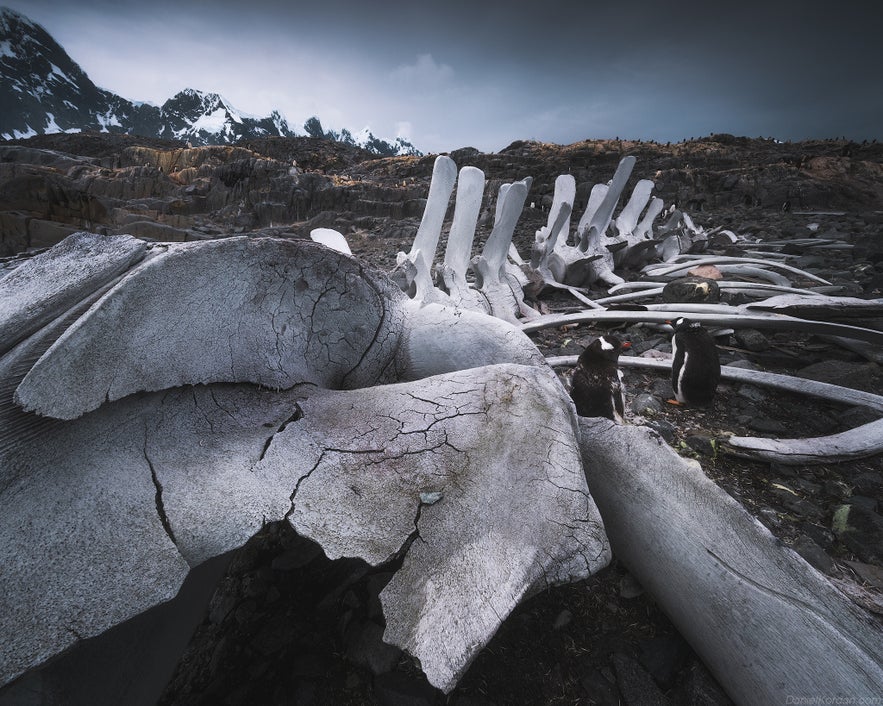
The Lemaire Channel gave us overcast, diffused light—perfect for photography. In that narrow geometry, the red sails looked even more striking. We anchored near Cuverville Island until lunch, beside one of the larger gentoo colonies.
Later we returned toward the South Shetlands. At Half Moon Island, we landed among chinstrap penguins and thriving birdlife, and came across a lone, stranded king penguin — a poor wanderer that had lost its way and would likely be beaten by other penguins.
We finished with a walk and photography session; Cámara Station on the ridge was unmanned. Then, one last gift: an evening drone session over Livingston’s mountains in sunset light.
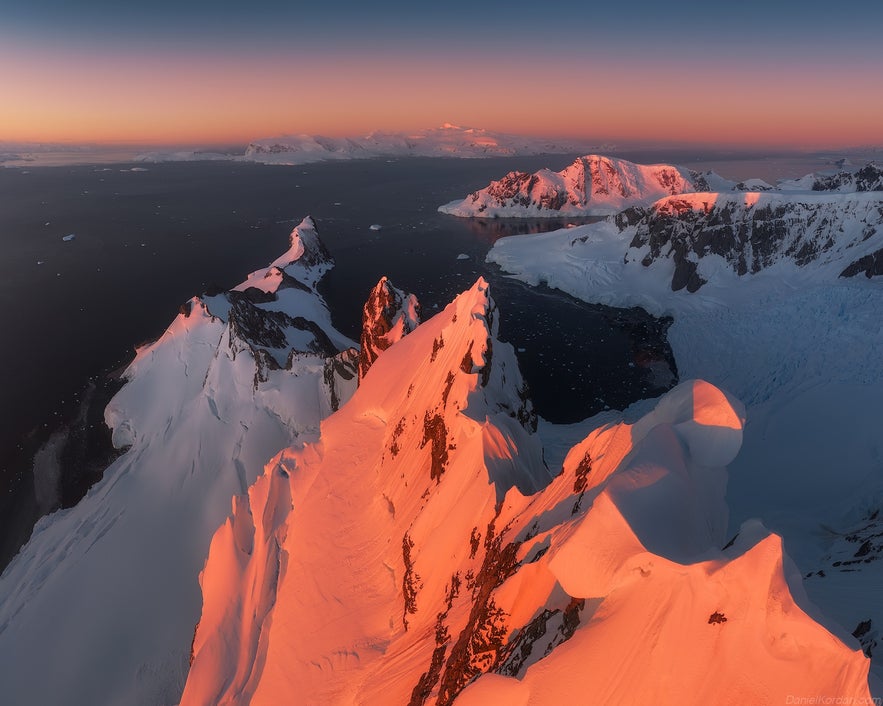
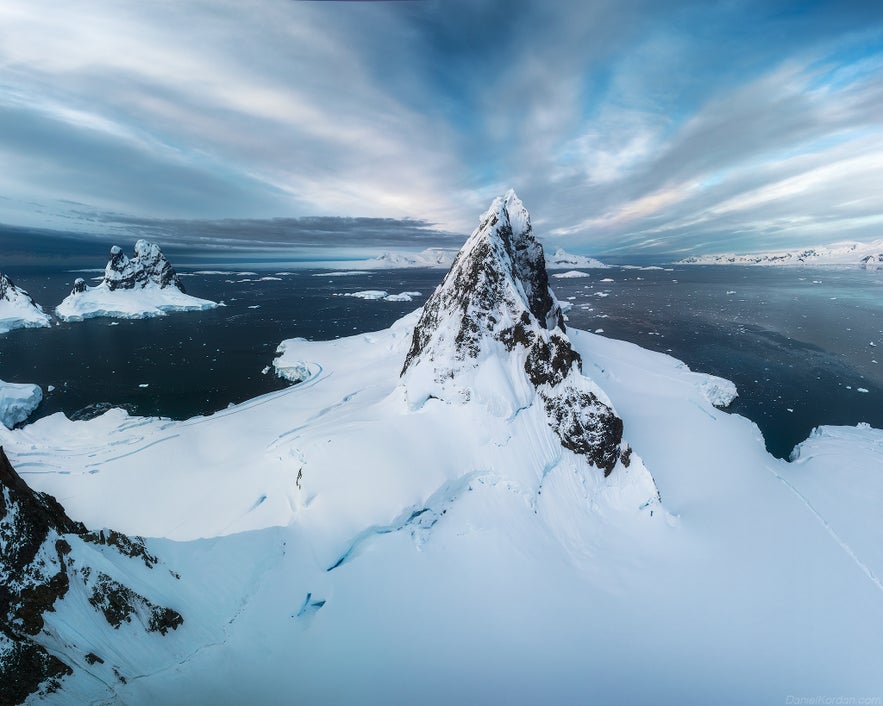
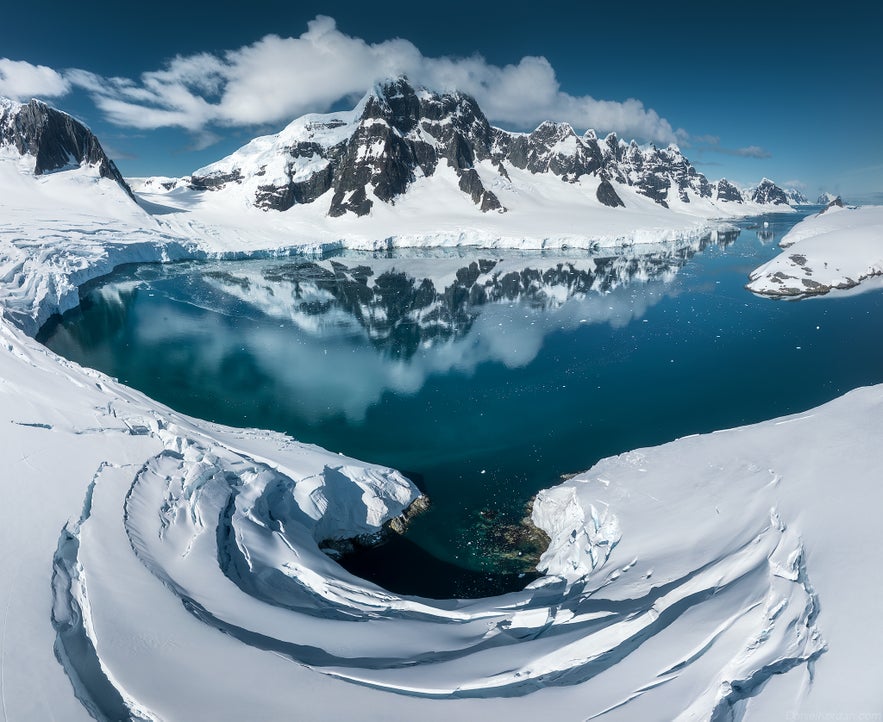
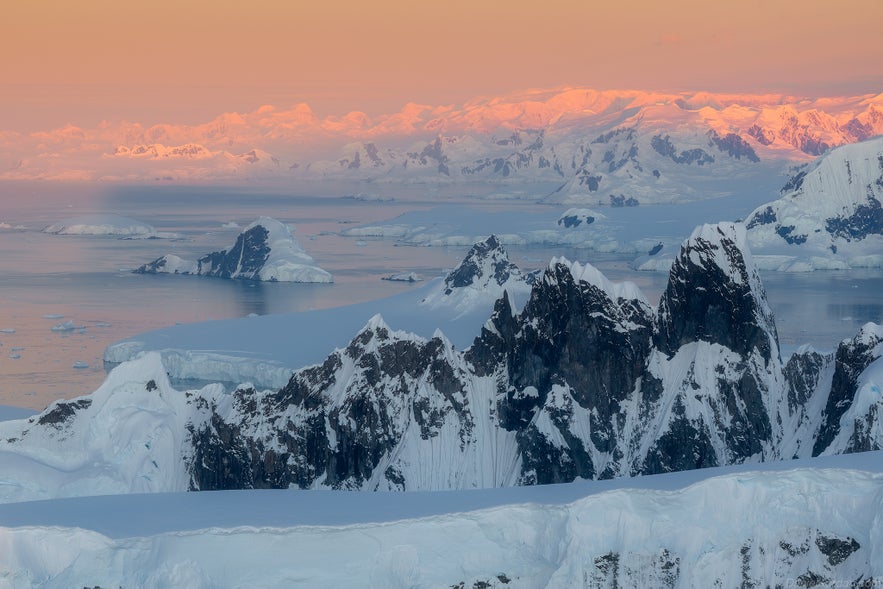
 On the final morning aboard Tolkien, we backed up files, cleaned gear, and did the recap. In the afternoon we headed to the airport, took the charter flight, and arrived back in Punta Arenas — tired, happy, and not quite ready to return to normal life.
I’ve photographed Antarctica before. I know how rare it is to get the right combination of people, platform, and conditions.
This expedition was extraordinary because it wasn’t just Antarctica—it was Antarctica with freedom: a small team of photographers, two agile yachts, and the ability to follow the light, the wildlife, and the weather the way the place demands. And the red sails made even the movement between landings part of the story.
That’s why this became the most memorable journey I’ve done in the south.

Renowned landscape photographer, Daniel Kordan, is an explorer at heart. Having realized his passion for photography and traveling at a young age, he now spends his time sharing his vision and the many wonders of the world with people all around him.